Bond County Dog Registration Information
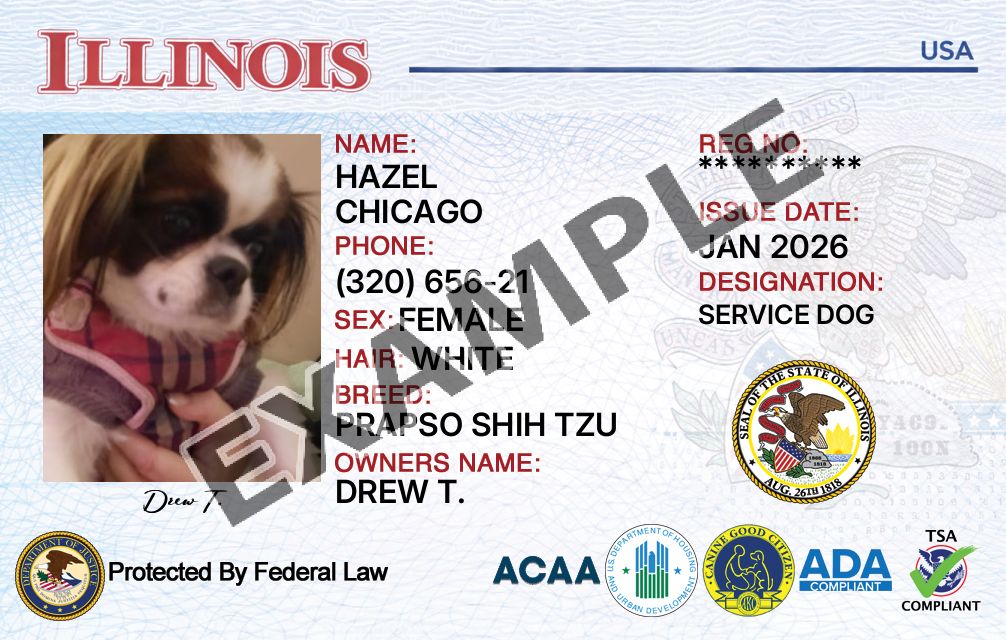
Service Dogs and Emotional Support Animals in Bond, Illinois
If you’re asking, “where do I register my dog in Bond County, Illinois for my service dog or emotional support dog,” the key thing to know is that there are two separate topics: (1) local dog licensing/registration (often tied to rabies vaccination) and (2) the legal status of a service dog or emotional support animal (ESA). In Bond County, dog-related enforcement and animal control contact is handled locally, and residents may also need to follow city or village licensing rules depending on where they live inside the county.
- There is no single universal federal “service dog registry” or “emotional support animal registry” where you officially register a service dog or ESA.
- Dog licensing (sometimes called registration) is a local requirement that may apply to all dogs, including service dogs and emotional support dogs, and often requires proof of rabies vaccination.
- Inside Bond County, requirements can differ between the City of Greenville, other municipalities, and rural/unincorporated areas—so it’s important to start with the official offices listed below.
Where to Register or License Your Dog in Bond County, Illinois
The following offices are the most relevant official contacts found for Bond County residents who need help with dog licensing/registration questions, animal control contact, and related local requirements. If your address is within a city or village, you may also have a municipal license requirement in addition to any county processes.
Bond County Animal Control (contact through Greenville Police Department)
Bond County Health Department
- Mon–Fri: 8:30 AM – 4:00 PM
- Sat–Sun: Closed
Overview of Dog Licensing in Bond County, Illinois
What “dog registration” usually means locally
In many Illinois counties and municipalities, “registering” a dog commonly means obtaining a local dog license or registration tag. These programs are often connected to rabies vaccination compliance and can help animal control identify a dog and contact the owner if a pet is found.
County vs. city rules inside Bond County
Bond County includes incorporated areas (like the City of Greenville) as well as rural and unincorporated areas. Your exact steps may depend on your address:
- If you live within city limits, you may have a city/village animal licensing requirement (often administered through a city office or local enforcement).
- If you live in rural/unincorporated Bond County, county-level animal control guidance and county ordinances are more likely to apply.
Because municipal rules can differ, the safest approach is to start by contacting Bond County Animal Control (via Greenville Police Department) to confirm which local licensing/registration requirements apply to your address, then follow the instructions they provide for your jurisdiction.
What You Need Before Registering a Dog
Common documents and information
While exact requirements can vary by municipality within Bond County, dog licensing requirements commonly ask for:
- Rabies vaccination proof (certificate from your veterinarian and/or rabies tag number)
- Owner contact information (name, address, phone)
- Description of the dog (breed, color, sex, age)
- Spay/neuter documentation (if applicable—some places set different fees based on altered status)
Service dogs and ESAs: what to bring (and what not to expect)
If you’re registering a dog in Bond County that is a service dog or emotional support dog:
- You should still be prepared to provide the same licensing items as any other dog if your jurisdiction requires a dog license (especially rabies proof).
- You should not expect a federal “service dog registration number” or federal ESA registration paperwork—these are not part of official federal service animal law.
Steps to Register or License a Dog in Bond County, Illinois
Step 1: Confirm your jurisdiction (city limits vs. unincorporated county)
Start by confirming whether your address is inside the City of Greenville (or another municipality) or in unincorporated Bond County. This matters because the “right” office for licensing can differ.
- If you are unsure, call Bond County Animal Control using the official contact listed above and ask which licensing/registration rule applies to your address.
Step 2: Make sure your rabies vaccination is current
Local registration programs typically rely on current rabies vaccination status. Your veterinarian can provide a rabies certificate and a tag (if issued at the time of vaccination). Keep copies of your paperwork for your records.
Step 3: Submit the required information and pay any applicable fee
Once you confirm the correct jurisdiction and process, you’ll generally:
- Provide the required documentation (often rabies certificate and owner/dog details)
- Pay the licensing/registration fee (if your local ordinance has one)
- Receive a local tag/confirmation (varies by jurisdiction)
Step 4: Keep your dog’s identification current
If you move within Bond County (for example, from rural Bond County into the City of Greenville, or vice versa), re-check local requirements. Also keep your rabies vaccination current so you’re not caught off-guard at renewal time or during an animal control interaction.
Service Dog Laws in Bond County, Illinois
Service dog status is based on training and function—not a registry
A service dog is generally understood as a dog trained to do specific tasks for a person with a disability. The dog’s legal status comes from the dog’s work or tasks and the handler’s disability-related need—not from an “official registration website” or a purchased certificate.
Licensing vs. access rights
It’s common for people to mix up local licensing with service dog rights. Here’s the practical difference:
- Dog license in Bond County, Illinois: a local compliance step that may apply to any dog living in a jurisdiction, often tied to rabies vaccination.
- Service dog public access: governed by disability law and typically depends on the dog being trained to perform disability-related tasks and being under control in public.
Do service dogs still need a local dog license?
In many places, service dogs are still expected to follow local animal rules like rabies vaccination and licensing/registration unless there is a specific local exemption. Because exemptions (if any) are local, confirm with Bond County Animal Control (and your municipality, if applicable) whether any fee waiver or special process applies.
Emotional Support Animal Rules in Bond County, Illinois
ESAs are not the same as service dogs
An emotional support animal (ESA) is a pet that provides comfort by being with a person. ESAs are not trained to perform specific disability-related tasks in the way service dogs are. Because of that, ESAs generally do not have the same public access status as service dogs.
Licensing still matters for ESAs
If your dog is an emotional support dog living in Bond County, the local dog licensing requirements (when applicable) generally still apply. In other words: being an ESA does not replace the need to follow local requirements like a dog license and current rabies vaccination documentation.
Dog License vs. Service Dog vs. Emotional Support Animal (Quick Comparison)
| Category | Dog License (Local Registration) | Service Dog | Emotional Support Animal (ESA) |
|---|---|---|---|
| What it is | A local licensing/registration program tied to animal control and public health rules (often rabies-related). | A dog trained to perform specific tasks for a person with a disability. | A pet that provides comfort or emotional support by its presence. |
| Who issues it | Typically a local government office or designated local authority (city/village or county). | No single issuing office; legal status is based on disability law and the dog’s training/tasks. | No single issuing office; generally supported by documentation for certain housing-related situations. |
| Is there a universal federal registry? | No (it’s local, not federal). | No. | No. |
| Rabies vaccination proof often required? | Yes, commonly required for licensing/registration. | Commonly required for local licensing where applicable (same as other dogs). | Commonly required for local licensing where applicable (same as other dogs). |
| Public access to most places open to the public | Not applicable (license is not an access credential). | Yes, when the dog meets legal definitions and is under control. | Generally no (ESA status does not automatically grant public access). |
| What Bond County residents should do | Confirm local rules and register/license through the correct jurisdiction. | Follow local licensing/rabies rules and keep training/behavior standards high; confirm any local exemptions directly with official offices. | Follow local licensing/rabies rules; understand ESA status is not a “registration” and does not replace local licensing. |
Frequently Asked Questions
Local verification disclaimer
Local laws, fees, office locations, and contact details can change. Residents should verify the most current information with their local animal services or licensing office in Bond County, Illinois.
Register A Dog In Other Illinois Counties
Select your county below to get started with your dog’s ID card. Requirements and license designs may vary by county, so choose your location to see the correct options and complete your pup’s registration.
- Adams County Dog Registration
- Alexander County Dog Registration
- Boone County Dog Registration
- Brown County Dog Registration
- Bureau County Dog Registration
- Calhoun County Dog Registration
- Carroll County Dog Registration
- Cass County Dog Registration
- Champaign County Dog Registration
- Christian County Dog Registration
- Clark County Dog Registration
- Clay County Dog Registration
- Clinton County Dog Registration
- Coles County Dog Registration
- Cook County Dog Registration
- Crawford County Dog Registration
- Cumberland County Dog Registration
- DeKalb County Dog Registration
- DeWitt County Dog Registration
- Douglas County Dog Registration
- DuPage County Dog Registration
- Edgar County Dog Registration
- Edwards County Dog Registration
- Effingham County Dog Registration
- Fayette County Dog Registration
- Ford County Dog Registration
- Franklin County Dog Registration
- Fulton County Dog Registration
- Gallatin County Dog Registration
- Greene County Dog Registration
- Grundy County Dog Registration
- Hamilton County Dog Registration
- Hancock County Dog Registration
- Hardin County Dog Registration
- Henderson County Dog Registration
- Henry County Dog Registration
- Iroquois County Dog Registration
- Jackson County Dog Registration
- Jasper County Dog Registration
- Jefferson County Dog Registration
- Jersey County Dog Registration
- Jo Daviess County Dog Registration
- Johnson County Dog Registration
- Kane County Dog Registration
- Kankakee County Dog Registration
- Kendall County Dog Registration
- Knox County Dog Registration
- Lake County Dog Registration
- LaSalle County Dog Registration
- Lawrence County Dog Registration
- Lee County Dog Registration
- Livingston County Dog Registration
- Logan County Dog Registration
- Macon County Dog Registration
- Macoupin County Dog Registration
- Madison County Dog Registration
- Marion County Dog Registration
- Marshall County Dog Registration
- Mason County Dog Registration
- Massac County Dog Registration
- McDonough County Dog Registration
- McHenry County Dog Registration
- McLean County Dog Registration
- Menard County Dog Registration
- Mercer County Dog Registration
- Monroe County Dog Registration
- Montgomery County Dog Registration
- Morgan County Dog Registration
- Moultrie County Dog Registration
- Ogle County Dog Registration
- Peoria County Dog Registration
- Perry County Dog Registration
- Piatt County Dog Registration
- Pike County Dog Registration
- Pope County Dog Registration
- Pulaski County Dog Registration
- Putnam County Dog Registration
- Randolph County Dog Registration
- Richland County Dog Registration
- Rock Island County Dog Registration
- Saline County Dog Registration
- Sangamon County Dog Registration
- Schuyler County Dog Registration
- Scott County Dog Registration
- Shelby County Dog Registration
- St. Clair County Dog Registration
- Stark County Dog Registration
- Stephenson County Dog Registration
- Tazewell County Dog Registration
- Union County Dog Registration
- Vermilion County Dog Registration
- Wabash County Dog Registration
- Warren County Dog Registration
- Washington County Dog Registration
- Wayne County Dog Registration
- White County Dog Registration
- Whiteside County Dog Registration
- Will County Dog Registration
- Williamson County Dog Registration
- Winnebago County Dog Registration
- Woodford County Dog Registration